→Below-replacement entry on a Main Avenue retail condo
$360k closed sale at $229/SF, after $73k in cumulative price reductions. The subject's own sale is the strongest single comparable in the dataset.
A documented, conservative case for acquiring a 1,572 SF commercial condominium on a scarce historic Main Street block, at a basis of $229 per square foot — underwritable on real-estate fundamentals alone, with operator-driven upside as a separate option layer.
The strongest version of this memorandum is not the operator concept. It is the property: a scarce, hard-to-replicate Main Avenue commercial condominium acquired below replacement, in a town whose constraints are also its moat, on a block already proving third-place demand.
The pitch is therefore structured as a real-estate underwrite first. The asset must be defensible if the buyer rents it, resells it, or operates it differently than originally imagined. Operator-driven upside is treated as an option layer above that floor — present, plausible, and material, but never load-bearing.
What follows is organized so a sophisticated reader can interrogate each leg independently: location, comparables, operating costs, controls, risk, decision gates. Confidence is tagged on every factual claim. Counter-arguments are stated, not buried.
$360k closed sale at $229/SF, after $73k in cumulative price reductions. The subject's own sale is the strongest single comparable in the dataset.
Gallery, retail, wellness, professional office, creative studio, lease to compatible tenant, owner-operator concept, or resale to an owner-user. The deal does not depend on a single-use bet.
Ocean Grove cannot be reproduced. Sober, walkable, historic, dense, identity-rich. Asbury growth pressure compounds against it; sober-economy and IRL-experience trends compound with it.
The upper case depends on ground lease, condo governance, lender treatment, insurance pricing, and OGCMA consent. None are speculative; all are reviewable. The diligence sequence is defined.
Underwrite the property first. Treat the operator concept as the upside engine. Convert unknown friction into bounded risk before assigning a strategic premium.
Each path is underwritten independently. Capital is asked to fund a basis the buyer believes survives any single path failing. The three paths converge on the same property; they diverge on what justifies it.
Acquire at $229/SF. Do little. Let Asbury growth, sober-economy, and walkable-historic trends compress the discount over a 5–10 year hold. Refinance or resell into a market that has caught up to the basis.
Ocean Grove commercial condo supply on Main Avenue appears structurally constrained. Demand growth is plausible — supported by Asbury adjacency, sober-economy and IRL trends, and Odyssey block-level traction — but still requires broker rent support, tenant inquiry evidence, and additional Main Avenue lease comps to be considered proven. The premise is that today's $229/SF basis re-rates toward the $250–$300/SF band that comparable shore historic-main retail already commands on a transferable basis.
Stabilize and lease to a tenant whose use is OGCMA-compatible: gallery, boutique retail, wellness, professional service, creative studio, design showroom, or appointment-based personal service. Reference rent: 69 Main at ~$16/SF/year.
Income at this rent does not justify the deal alone. It does cover most of the carrying cost stack and produce a defensible debt-service-coverage profile, anchoring downside while appreciation accrues.
The buyer occupies and operates a daytime gallery / retail / appointment concept with evening programmed events — a sober, intellectual, third-place format that rhymes with Odyssey's anchor on the same block and with documented national demand for IRL cultural venues.
Owner-operation replaces third-party rent with ownership carry (debt service, taxes, insurance, condo, reserves, opportunity cost) and concentrates business risk in the asset. The benefit is control, occupancy on the operator's own terms, and equity build if the asset is well-maintained and exits above all-in basis — not free occupancy. Concept detail is in Appendix B; it is upside, not the basis of the ask.
Honest framing. Capital can evaluate Path A and Path B without underwriting the operator concept, but current rent evidence does not make this a yield-driven deal: at the 69 Main reference rate (~$25k/yr gross), Path B does not on its own clear levered debt service plus operating carry. The deal therefore requires at least one of: patient appreciation capital comfortable with a real-estate-beta hold, owner-user value (occupancy worth more than market rent to the user), or operator upside above the basis. Path C is structured as the operator's private upside engine — present, but not the basis of the ask.
The strongest macro story for this property is not Netflix Fort Monmouth and not the sober-economy trend. It is the structural compression occurring at the Asbury Park / Ocean Grove boundary — and the supply-side fact that Ocean Grove is one of the very few historic, walkable, identity-coherent shore main streets in New Jersey, with no path to manufacture more of itself.
Asbury Park has compounded as a cultural, hospitality, and residential market for more than a decade. New construction, hotel openings, and rising resi prices push spillover demand into adjacent micro-markets. Ocean Grove sits 0.5 miles south across Wesley Lake.
One of the very few intact 19th-century planned Methodist camp-meeting towns. Tent City, the Great Auditorium, dense Victorian blocks, walkable scale, ocean frontage, no alcohol. There is no land where a competitor builds a second Ocean Grove.
Odyssey Coffee moved into the old bank building at 63 Main in early 2025 — the same block as the subject. Its visible local traction is encouraging block-level evidence of third-place demand. It is not proof of transferable demand for this property, this rent, or any specific operator concept; it is one adjacent operator with documented market acceptance.
Coastal Monmouth received documented in-migration through and after 2020. Remote-flexible professionals with cultural taste are exactly the audience for walkable historic main streets and intellectual third-place programming.
Confidence: proxy — directional from public migration data; not parcel-specific.
49% of US adults reported trying to drink less in 2025 (Circana). Documented IRL/salon revival operators (Bright Nights Social, Interintellect-style formats, listening rooms) demonstrate willingness to pay for programmed presence. OG's no-alcohol environment becomes congruent rather than constraining.
Netflix's $1B Fort Monmouth campus and NJEDA film-economy momentum sit ~6 miles inland. They support regional hiring and visitor density; they do not directly underwrite Main Ave retail rent. Treat as background, not income.
Confidence: direct on facts · inferred on transmission.
Straight-line distances from public geocoding. Walking distances are similar; driving distances longer due to Wesley Lake bridges. Verify before any leasing/marketing claim.
Ocean Grove is not just another Jersey Shore micro-market. It is a planned 19th-century Methodist camp-meeting town, a state and national historic district, and a leasehold-control environment inside Neptune Township. Each of those words is a real economic feature.
The control stack — Neptune Township + OGCMA + condo association + HPC — produces friction that prices into discounts at acquisition and premiums at exit, when the buyer has done the documented work to clear the toll.
Founded by Methodist ministers as a summer camp meeting where "religion and recreation should go hand in hand." Chartered 1870 as permanent camp-meeting grounds. The Great Auditorium remains the spiritual and architectural center.
Among the earliest planned Victorian communities in the United States. Dense blocks, porches, small lots, walkability, tent-cabin heritage, and Main Avenue commercial frontage. The form cannot be replicated under modern zoning anywhere.
Closings are typically leasehold-deed transactions: buyers obtain transferable use/title rights to improvements while the underlying land is leased from OGCMA. Residential ground rent is famously nominal; commercial structure has been litigated and is opaque.
Confidence: direct on residential · unverified for this specific commercial unit.
Permitted commercial uses include neighborhood retail, galleries, gift shops, personal services, coffee shops, restaurants, light food, and offices. Change of use requires OGCMA written consent. Exterior alterations require HPC Certificate of Appropriateness. Alcohol is prohibited town-wide.
The constraint is part of the brand. Sober, historic, walkable, preserved, dense, emotionally specific. The friction is approval; the upside is a market identity that cannot be recreated in a strip center, anywhere.
This memorandum is intended to be auditable, not merely persuasive. The table below ties the central factual claims to their sources and confidence tier. The full source trail is in Section 14.
| Claim | Evidence | Underwriting use | Confidence |
|---|---|---|---|
| Subject has a hard sale anchor. | MLS-mirrored listing reports $360,000 closed 12/24/2025; 1,572 SF; $229/SF. | Primary basis anchor; the strongest comp is the subject itself. | direct |
| Sale followed material price discovery. | $433k original ask → $395k → $360k closed. Cumulative reductions of $73k or 17%. | The market priced this asset down before clearing it. Anchor reflects exposure-tested price. | direct |
| FEMA flood class is Zone X. | FEMA NFHL parcel-point query: Zone X, SFHA=false, FIRM panel 34025C0334G, effective 2022-06-15. | Reduces (does not eliminate) lender flood-insurance friction. Wind/coastal coverage remains a separate underwriting line. | direct |
| Adjacent C14 (550 SF) exists and recently transacted. | 55 Main #3 / parcel C14 / MLS 22330277, 550 SF retail condo, sold $145k on 5/24/2024. Listing language referenced "can be purchased with the adjacent 1,572 SF unit." | Confirms the assemblage option historically existed; converts current assemblage from "automatic" to "neighbor-negotiable." | direct |
| Ocean Grove controls materially affect value. | OGCMA: no alcohol, written consent for change of use, exterior alteration approvals. Neptune HPC: Certificate of Appropriateness for facade/signage. | Explains a portion of the discount. Defines diligence sequence and bounds the realistic use set. | direct |
| Local rent support is modest in absolute terms. | 69 Main Ave: $3,200/month for 2,392 SF, ~$16/SF/year. Same street, same use class. | Caps a yield-only underwrite. Establishes income floor; does not produce the deal IRR alone. | direct |
| Block has documented third-place demand. | Odyssey Coffee opened in former bank building at 63 Main in early 2025; rapid local traction in community press. | Direct evidence that programmed daily-use retail draws traffic to this exact block; supports demand-side reasoning rather than substituting for tenant interest. | direct |
| Sober economy is a structural shift, not a fad. | Circana: 49% of US adults 21+ trying to drink less in 2025. 65% of Gen Z plan to drink less. 41% of Gen Z plan to visit a sober bar. | Reframes OG's no-alcohol constraint as identity-congruent for a specific consumer cohort. | proxy |
| Regional creative-economy catalyst exists. | Netflix Fort Monmouth: $1B, 292 acres, 12 soundstages. NJEDA documents major NJ film-production spend. | Macro context. Does not transmit to Main Ave retail rent without a documented local capture mechanism. | direct facts · inferred transmission |
Confidence legend. direct primary source confirms the claim · proxy source supports a closely related claim, transferred with stated logic · inferred structured analyst inference, not directly sourced · unverified claim awaiting primary documentation in diligence.
Raw $/SF without adjustment is misleading. The table below shows each comparable's headline number, the analyst-adjusted transferable signal, and the explicit logic used to bridge the two. Readers can disagree with the adjustment; they should not have to guess at it.
Headline numbers, sorted high to low. Active listings are not closed-sale evidence; treat as directional.
★ Subject. Hospitality and small-unit comps headline at $360–$677/SF; the subject's $229/SF reflects retail-condo + leasehold + OG-control discount.
Same comps, adjusted for property type, location, rights, scale, and use economics. Adjustment logic is shown in the table below.
After adjustment, comparable shore historic-main retail clusters in the $180–$285/SF band. Subject's $229/SF sits inside this band — neither bargain-priced nor overpriced on adjusted comps.
| Asset | Status | Raw signal | Adjusted | Adjustment logic | Relevance |
|---|
The LoopNet/MLS reference to a 550 SF adjacent unit resolves to a real adjacent retail condominium: 55 Main Ave Unit 3, parcel C14. The complication is timing. C14 sold separately in May 2024, before the subject closed. The assemblage is no longer an automatic acquisition; it is now a neighbor relationship.
55 Main Ave #3, MLS 22330277, 550 SF, retail, parcel 35-00164-0000-00002-C14, sold 5/24/2024 for $145,000. The listing copy explicitly stated the unit "can be purchased with the adjacent 1,572 SF unit."
An additional 550 SF storefront enables: separate revenue bay, prep / back-of-house, gallery + retail split, workshop room, service room, or simply more facade and street presence on a high-visibility block.
The C14 owner-of-record can be identified through Monmouth County records. A low-pressure post-close conversation establishes whether lease, right-of-first-refusal, or eventual acquisition is plausible. Until then, do not capitalize the upside.
Even with a willing C14 owner, physical combination depends on condo master-deed provisions and any party-wall, utility, and structural questions. This is reviewable, not assumable.
Assemblage is the cleanest path to making the operating box materially better. But the deal must work without it. The C14 conversation is upside; the C13 acquisition is the deal.
The price is the easy number. The harder numbers are taxes, condo dues, ground rent, insurance, utilities, and reserves — and how they combine into a monthly carry across plausible scenarios. Each line below shows the assumption and the source of uncertainty.
| Cost line · with assumption | Low ($/yr) | Base ($/yr) | High ($/yr) |
|---|
Numbers are pre-debt operating burden only. Debt service is modeled separately below. Insurance is the largest single source of uncertainty until coastal commercial quotes are received; condo dues are the second.
| Capital structure | Down % | Equity | Debt | Rate | Monthly P&I |
|---|
Small-balance commercial lending into a leasehold + condo structure is a constrained market. All-cash eliminates the lender review as a transaction risk; financing should be pre-validated with at least three lenders before LOI.
All figures are scenario-modeled illustrations, not appraisal or quoted numbers. Insurance, condo dues, and ground rent are the three lines requiring binding numbers before any capital commitment.
The most useful question a sophisticated reader asks first: strip out the upside engine — what return does the property produce on its own? The model below answers that question across four scenarios. Assumptions are conservative and visible. Exits are anchored to the adjusted-comp band from Section 06, not to aspirational pricing.
| Scenario · with assumption | Exit (5 yr) | Cum. net rent | All-in basis | Net to equity | IRR / multiple |
|---|
Assumptions held across scenarios. All-in basis includes $360k purchase, ~$15k closing/transfer/legal, ~$7k initial buildout reserve. Net rent is gross rent minus operating cost stack from Section 08 (base case). Selling cost: 5% of exit price (broker, transfer, settlement). IRR is approximate, single-decimal-point precision; sensitivity to insurance, condo dues, and exit cap is material. Numbers are scenario illustrations, not appraisal or projection. Capital should validate own assumptions in independent diligence.
If the property leases below market, holds at flat appreciation, and exits at modest re-rating, equity is mildly impaired over a 5-year hold. Capital should be sized to absorb this scenario without distress.
Stabilized lease at the 69 Main reference rate, normal carry, exit toward middle of adjusted comp band: low-single-digit IRR. Acceptable to patient capital seeking real-estate exposure with optionality, not to capital seeking equity-like returns.
The deal becomes interesting in scenarios where operator concept clears OR C14 is reacquired. Either path is plausible but neither is base-case. Capital that requires double-digit IRR should pass; capital seeking modest returns with real upside optionality should consider.
The discount embedded in this purchase compensates a buyer who can document the control stack. The dashboard below sequences each diligence item by importance and decision effect, so capital can see exactly what is being verified before it is committed.
| Document / verification | Status | Importance | Decision effect | Source |
|---|
Importance scored 1–5 by a hybrid of (a) probability the document changes the deal and (b) magnitude of that change. Items at 5/5 are kill-or-clear gates; do not advance to capital commitment until each returns a documented answer.
Trust is built by visibly resisting the urge to oversell. The bear case for each leg is stated below alongside the most credible bull rebuttal. A reader who finds the bear case more persuasive than the bull is correctly identifying that this deal is not for them.
The market exposed this property at $433k, then $395k, then cleared at $360k. The price is what the market said it was worth. There is no embedded discount to capture; later resale will require a different market, not just the same market noticing.
Adjusted-comp work in Section 06 places comparable shore historic-main retail in a $180–$285/SF band on a transferable basis; $229/SF sits at the lower-mid of that band. Adjacent submarket (Asbury) commercial signals materially higher. Trend, supply, and adjacency vectors are positive. The price is fair today; the structural reasons it might not stay fair are independent and credible.
If lenders won't lend on the leasehold, if condo bylaws restrict use, if HPC slows every change, the discount isn't a discount — it's a permanent friction tax. A future buyer faces the same problems and pays a similarly discounted price; the basis never re-rates.
This is exactly the bear case the diligence sequence is designed to test. If lenders refuse the structure or condo docs reveal hostile governance, the deal stops at the gate rather than after capital is committed. Cape May, Spring Lake, and Red Bank historic cores demonstrate that documented control stacks can clear lender review and produce premium pricing over time.
Netflix Fort Monmouth is six miles inland. Asbury growth has been "about to spill into Ocean Grove" for years. Sober-economy stats describe national consumer attitudes, not Main Avenue rent. None of these underwrite a single tenant on this block.
This memorandum explicitly does not capitalize macro narratives. It uses them to describe the directional why-now for a property thesis whose underwriting rests on basis, comps, optionality, and exit liquidity. Path A, B, and C each work without belief in any macro story.
If the buyer's operator concept fails or never launches, the property reverts to a small leasehold retail condo in a no-alcohol town with $16/SF/yr rent comps. That is not a venture-grade exit.
The structure is precisely designed to defuse this. The capital ask funds the property, not the concept. Path A (hold & appreciate) and Path B (lease) are independently underwritable. Path C is the operator's private upside engine; it can fail completely without impairing the real-estate thesis.
Coastal NJ real estate carries climate risk that may reprice in insurance markets faster than appreciation accrues. A FEMA Zone X classification today does not bind a future flood-map revision; First Street already flags the broader area as having minor flood risk.
Real risk; explicitly modeled in the high insurance scenario. Ocean Grove sits at slightly higher elevation than Asbury North Beach; the subject's parcel-point Zone X is direct, not assumed. Climate-driven repricing also tends to favor structurally constrained, identity-rich destinations over interchangeable inventory; OG is on the favored side of that cut.
Severity reflects how badly the risk hurts if it materializes. Probability reflects current likelihood given known facts. Each item is paired with the specific diligence action or operating discipline that bounds it.
Capital deserves to know not only the proceed path, but every branch and every kill criterion. Each branch below has a defined trigger and a defined response. The point is to remove operator improvisation from moments that require it least.
All five-importance gates clear. Lender comfort confirmed. Insurance quoted within range. Use consent path identified.
Use path is feasible but slow. Capital costs higher than modeled. Insurance at high-scenario. Tax appeal uncertain.
If C14 owner is open to leasing rather than selling, structure assemblage as operating lease with right-of-first-refusal.
Any kill criterion triggers. The discount was real; it priced impairment, not friction. Capital is preserved for the next opportunity.
Leasehold structure blocks financing or future resale liquidity. OGCMA written consent is hostile or absent. Condo discloses material defect, hostile governance, or unfunded reserves. Insurance quote materially exceeds the modeled high scenario. Inspection reveals structural / ADA / code defect requiring buildout above reserves. No viable fallback use absent the operator concept.
Ground lease is financeable on terms acceptable to at least one lender. Condo docs and reserves are within tolerable bands. Insurance comes in at base scenario or below. OGCMA precedent supports intended fallback uses. Inspection produces a manageable capex line. Tax appeal pathway is documented even if outcome is uncertain.
These are public listing and source images. They establish physical context and block character. They do not substitute for inspection, photograph current condition, or document interior systems.

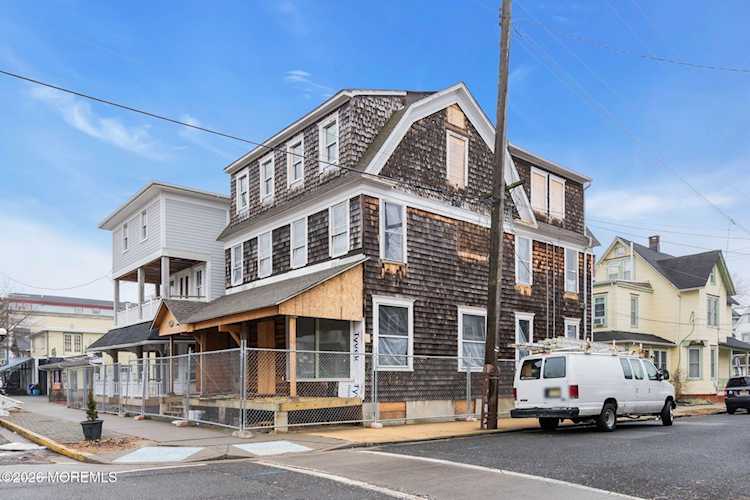
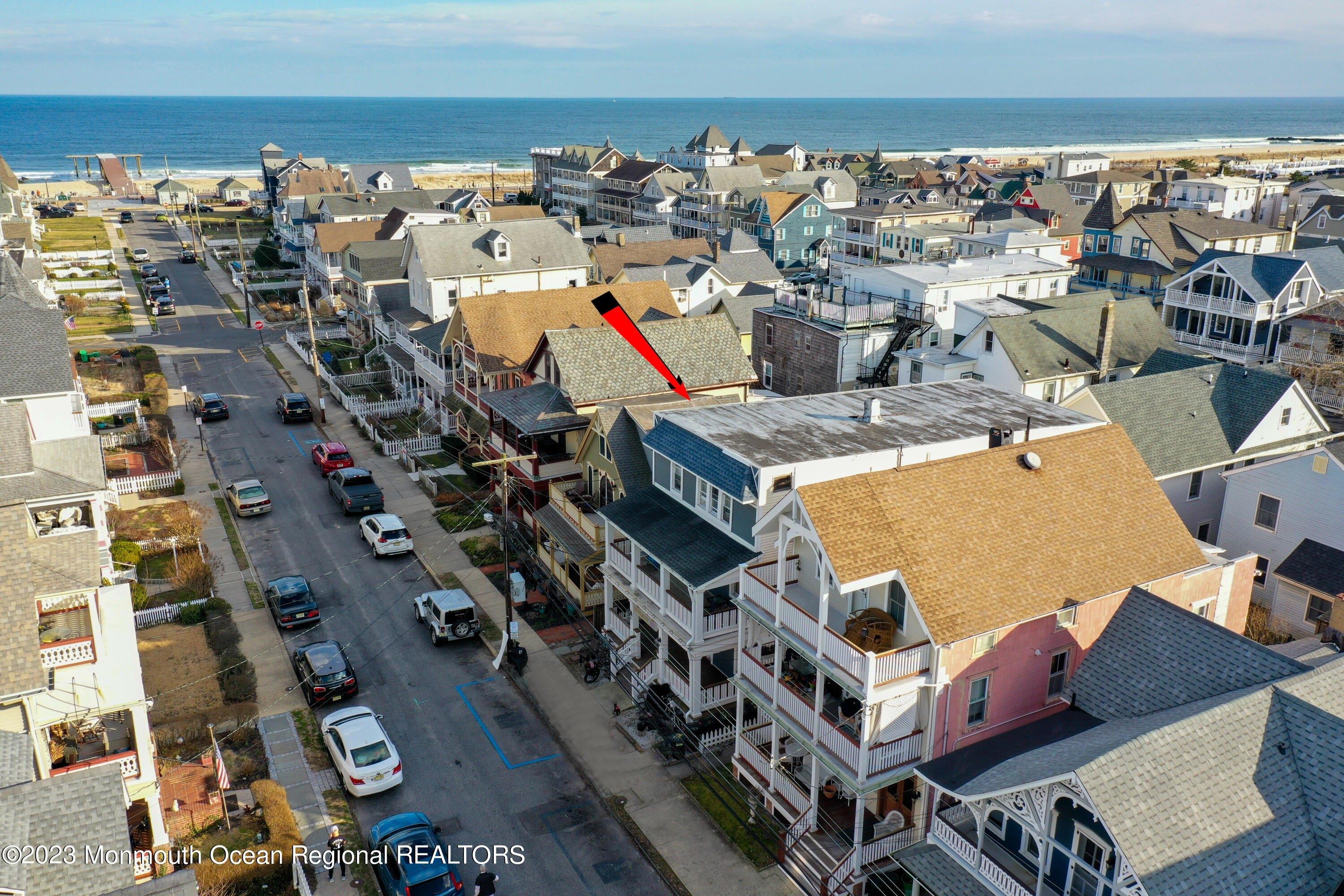
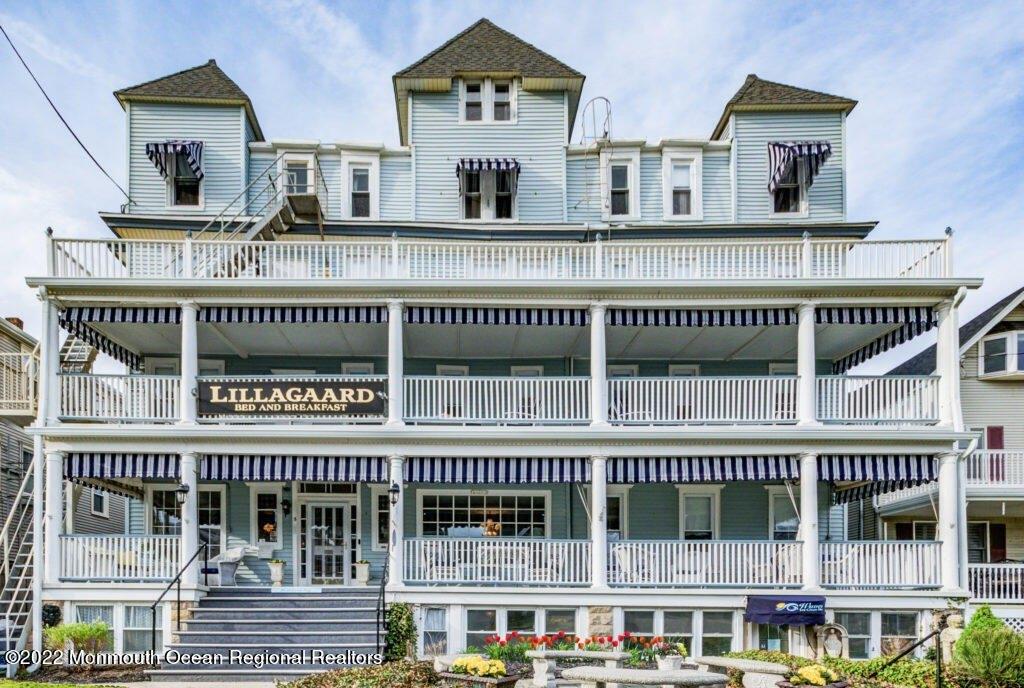
Primary public source trail used in this memorandum. Final investment commitments require primary documents (deed, lease, condo docs, lender term sheets, binding insurance quotes) and licensed professional review.
This is a first-time commercial buyer's roadmap. It assumes the property thesis is accepted and capital is committed. Each step has a target window. Steps are ordered by what unblocks the next; do not parallelize what is meant to gate.
Confirm capital commitments in writing, even if soft. Draft an LOI structured around an expansive due-diligence period (60–90 days), with the seller's cooperation on access to ground lease, condo docs, and inspection. LOI must reserve walk rights for any of the explicit kill criteria.
Specifically one with documented Ocean Grove / OGCMA leasehold experience. Counsel orders title commitment, requests OGCMA ground-lease assignment file, and reviews condo master deed, bylaws, three years of minutes, current budget, and reserve study.
Conversation, not formal application. Goal: confirm at least one lender will indicatively quote the leasehold + condo structure at acceptable LTV and rate. If zero lenders engage, all-cash becomes the only path; investor terms must reflect that.
Quote property, GL, flood (even at Zone X — lender may still require), wind/hail with explicit deductible, contents, business interruption, and event liability. Modeled scenarios must convert to binding numbers before close.
Structure, HVAC, roof, plumbing, electrical (with attention to 220V capacity for any programmed-use scenario), ADA exposure, signage condition, party-wall construction (relevant for any future C14 conversation). Defects reduce price or trigger walk.
Engage OGCMA office in writing. Disclose intended fallback uses (gallery, retail, professional office, light personal service) and confirm precedent for written consent. Request copy of ground-lease assignment terms specific to commercial units. Document both.
Pull the current tax card. If 2025 sale price meaningfully undercuts current assessment, retain a Monmouth County tax-appeal attorney on contingency. Do not assume relief; do scope its size if it occurs.
If any exterior change is contemplated within the first 12 months, schedule a pre-application meeting with Neptune Township HPC to confirm scope, timeline, and Certificate of Appropriateness pathway. Most issues here are timeline, not denial.
Pull current ownership of 55 Main #3 / parcel C14 from Monmouth County records. Open a relational dialogue post-close, not pre-close. Goal is to learn whether sale, lease, or operating cooperation is in scope — not to capitalize the answer in the underwrite.
Before heavy buildout, run a low-cost signal campaign: announce a small calendar of evening events, build a waitlist, observe sign-up rates, and learn pricing tolerance. This converts demand-side hypotheses into local data that informs both the operator path and any future tenant marketing.
By month 6 post-close, choose the operating path based on documented signal: continue owner-operate, list for lease at market, or hold passively while the basis appreciates. The decision is made on data, not on the original pitch.
This appendix exists for readers who want to understand the operator's owner-occupant intent. None of what follows is asked of the capital structure to underwrite. The capital ask is the property; this is what the operator personally proposes to do with it, on the operator's own time and risk, after close.
A daytime gallery, retail, and appointment space that becomes, in selected evenings, an intimate venue for programmed cultural presence: salons, listening rooms, readings, workshops, zero-proof gatherings, AI-literacy sessions, cybernetic portrait work, and small-format founder-led programming.
The framing is congruent with Ocean Grove's identity rather than in tension with it. Sober, intellectual, careful, beautiful, attentive. A liminal space between analog and digital, old and new, self and community — placed deliberately on a Main Avenue block already proving third-place demand through Odyssey, in a town historically built around gathering, contemplation, and the seriousness of presence.
The operator is willing to live and die on this concept. The structure of this memorandum is precisely designed so that capital does not have to share that risk. The property thesis stands without it.
Curated retail of rare objects, small editions, and printed matter. Appointment-based portrait, archival, and creative-direction work. Open hours that match Main Avenue foot traffic patterns.
Ticketed salons, listening sessions, readings, workshops, intimate dinners, AI-literacy clinics, zero-proof gatherings. Capacity small. Programming dense. Pricing tested.
A field office for a town facing an AI-shaped century — translation work between generations, between disciplines, between the old spirit of Ocean Grove and the new tools its residents will increasingly encounter.
0.03 mi from Odyssey. A block already proving third-place demand. A no-alcohol environment that is not a constraint for this concept but a precondition. A historic frame that elevates intentional programming.
Concept overhead is funded by the operator personally. Capital provides only the property. If the concept fails, the property reverts to Path A or Path B unchanged.
Because intent is part of underwriting trust. Capital deserves to see what the operator believes in, even when not asked to fund it. The operator believes this works; the deal does not require capital to.
A more complete articulation of this concept lives outside this memorandum and is available to readers who specifically request it. It is omitted here because including it in full would invert the structural priority of property thesis over operator concept that this document is designed to preserve.
Advance to documented diligence at the $360,000 anchor. Pre-validate financing, insurance, and OGCMA consent before LOI commitment. Treat the C14 conversation and the operator concept as separate upside layers — present, plausible, but not load-bearing. Walk decisively if any kill criterion triggers.
The edge is not that the deal is obviously cheap. The edge is that a cautious market may have discounted complexity that a prepared, concept-fit owner can convert into control — and that a documented, sequenced diligence pathway separates the buyer who can do that from the buyer who cannot.— Memorandum thesis